
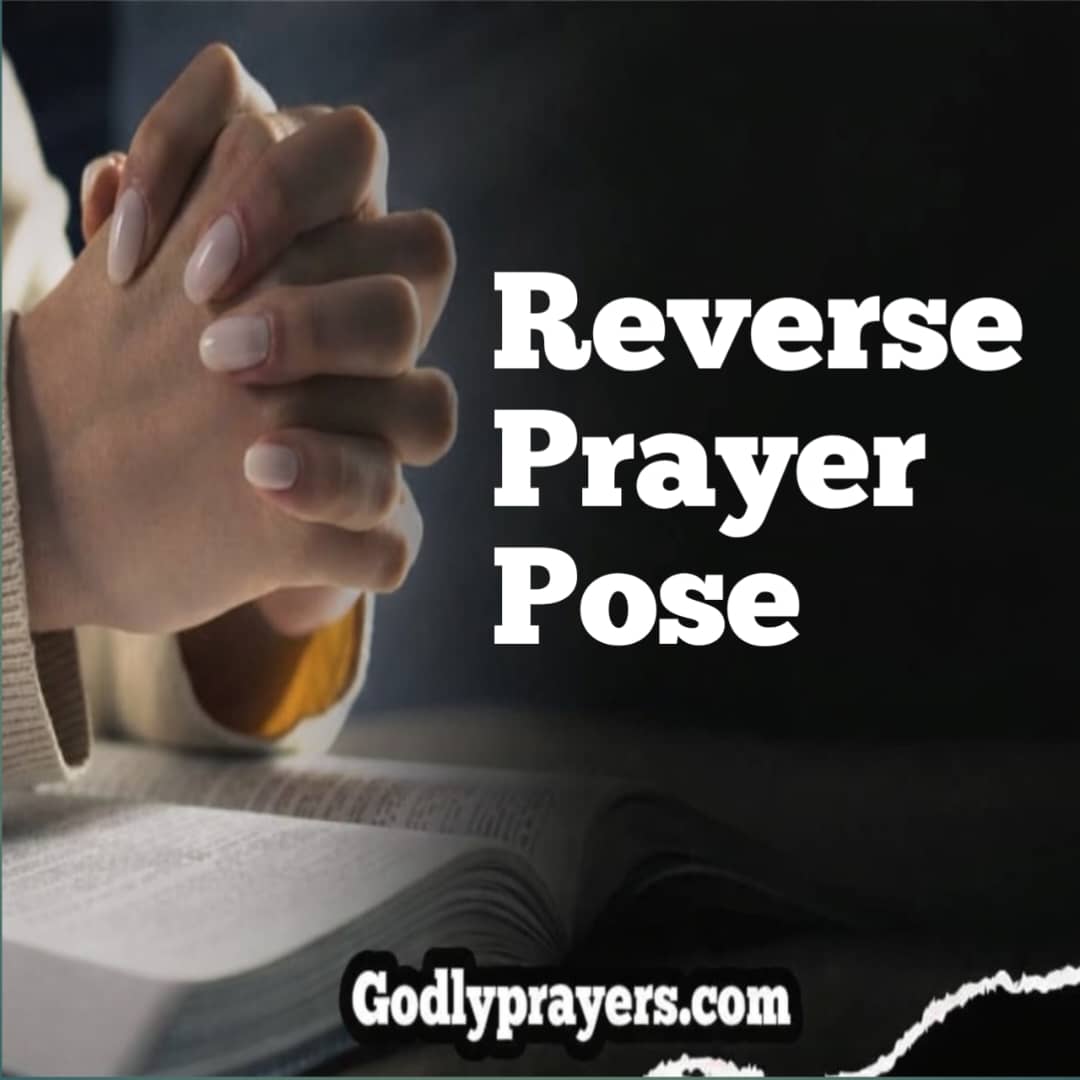
In a world that constantly pulls our attention outward toward noise, achievement, and self-promotion the soul longs for stillness. Prayer is one of the most powerful ways believers return to that stillness. While prayer can be offered in countless forms and postures, the reverse prayer pose stands out as a deeply symbolic act of humility, surrender, and openness before God.
The reverse prayer pose where the hands are placed behind the back with palms together or gently reaching toward one another is often associated with reflection, vulnerability, and inward devotion. Though not explicitly named in Scripture, physical postures of prayer have long played an important role in expressing the heart’s posture toward God. This pose invites believers to pray not only with words, but with the whole body.
The Spiritual Meaning of Prayer Postures
Throughout the Bible, prayer is often accompanied by physical expressions kneeling, lifting hands, bowing heads, or falling face-down before God. These postures communicate reverence, dependence, and submission.
“Come, let us bow down in worship, let us kneel before the Lord our Maker.” — Psalm 95:6
Prayer postures are not about ritual perfection, but about alignment. When the body reflects humility, the heart often follows. The reverse prayer pose symbolizes:
- Letting go of control
- Trusting God with what is unseen
- Offering oneself fully to God
It becomes a silent declaration: “Lord, I place myself entirely in Your hands.”
Also Read: The 5 Finger Prayer: A Simple Guide to Powerful, Purposeful Prayer
Understanding the Reverse Prayer Pose
The reverse prayer pose requires gentle effort and awareness. Unlike forward-facing prayer postures that symbolize offering or receiving, this pose turns the body inward. The hands, normally used to grasp or hold, are drawn behind the back symbolizing release.
Spiritually, this posture reflects surrender.
“Humble yourselves before the Lord, and he will lift you up.” — James 4:10
In prayer, the reverse prayer pose invites believers to loosen their grip on anxiety, pride, and self-reliance. It reminds us that prayer is not about control, but trust.
Humility: The Heart of the Reverse Prayer Pose
Humility is foundational to authentic prayer. Scripture repeatedly emphasizes that God responds to humble hearts.
“The Lord is close to the brokenhearted and saves those who are crushed in spirit.” — Psalm 34:18
The reverse prayer pose naturally draws the chest open and shoulders back, exposing a vulnerable position. Spiritually, this mirrors the openness God desires—a heart that is honest, dependent, and willing to be shaped.
When we pray from a posture of humility, we stop pretending we have all the answers. We acknowledge our need for God’s grace, wisdom, and mercy.
Surrendering Control Through Physical Prayer
Modern life encourages independence and self-sufficiency. Yet prayer calls believers to surrender not weakness, but strength found in God.
“Trust in the Lord with all your heart and lean not on your own understanding.” — Proverbs 3:5
The reverse prayer pose becomes a physical reminder of this truth. With hands drawn behind the body, there is nothing to cling to. It is an embodied confession that says, “God, I release my plans, my fears, and my burdens to You.”
This posture can be especially powerful during times of uncertainty, grief, or decision-making.
Breath, Stillness, and God’s Presence
Prayer is not only spoken, it is also breathed. When combined with slow, intentional breathing, the reverse prayer pose creates space for stillness.
“Be still, and know that I am God.” — Psalm 46:10
As the body stills, the mind begins to quiet. In this stillness, believers often become more aware of God’s presence. The reverse prayer pose invites reflection, allowing the Holy Spirit to speak gently to the heart.
Prayer in stillness teaches us to listen, not just talk.
Biblical Examples of Whole-Body Worship
While the reverse prayer pose is not named directly in Scripture, the Bible affirms worship that engages the entire body.
“I lift up my hands toward your holy sanctuary.” — Psalm 28:2
“Then Jesus fell with his face to the ground and prayed.” — Matthew 26:39
These examples show that posture matters, not because God requires it, but because it helps us express what words cannot. The reverse prayer pose fits within this biblical tradition of embodied worship, where the body becomes an instrument of devotion.
When to Use the Reverse Prayer Pose in Prayer
The reverse prayer pose can be used during:
- Personal devotional time
- Silent prayer or meditation
- Confession and repentance
- Seeking guidance or clarity
- Moments of deep surrender
It is especially meaningful when praying prayers of release, letting go of fear, resentment, or control.
There is no “correct” length of time. Even a few moments spent in this posture can deepen awareness of God’s nearness.
A Deep Heartfelt Prayer in the Reverse Prayer Pose
Heavenly Father,
I come before You just as I am, without pretense, without masks, without strength of my own. As I stand in this posture of surrender, I release every burden I’ve been carrying in silence.
Lord, You see what I hide from others. You know my fears, my doubts, and my unanswered questions. Teach me to trust You more deeply. Where I have clung to control, help me let go. Where pride has taken root, replace it with humility.
Breathe Your peace into my heart. Quiet my anxious thoughts. Align my spirit with Your will. I open myself fully to Your presence and invite Your transforming grace to work within me.
Father, I surrender my past, my present, and my future into Your loving hands. Shape me, guide me, and draw me closer to You. I trust You completely.
In Jesus’ name, Amen.
The Transformative Power of Embodied Prayer
Prayer engages more than words, it involves the mind, body, and spirit. The reverse prayer pose reminds believers that faith is not merely intellectual, but experiential.
“Offer your bodies as a living sacrifice, holy and pleasing to God this is your true and proper worship.” — Romans 12:1
When prayer becomes embodied, it often becomes more honest. The body speaks when words fall short. Through this posture, believers may experience:
- Emotional release
- Deeper spiritual awareness
- Renewed humility
- Greater trust in God
❓FAQ Section
1. What is the reverse prayer pose?
The reverse prayer pose is a prayer posture where the hands are placed behind the back with palms together or gently reaching, symbolizing surrender, humility, and openness before God.
2. Is the reverse prayer pose mentioned in the Bible?
The pose is not mentioned by name in Scripture, but the Bible supports physical expressions of prayer such as bowing, kneeling, and lifting hands as acts of reverence and worship.
3. What does the reverse prayer pose symbolize spiritually?
Spiritually, it represents letting go of control, trusting God fully, humility of heart, and offering oneself completely to God.
4. When is the best time to use the reverse prayer pose?
It is especially meaningful during personal devotion, silent prayer, repentance, surrender, or moments of reflection and spiritual listening.
5. Does prayer posture really matter to God?
Prayer posture is not required but can help align the heart with humility and focus, allowing believers to pray more intentionally and sincerely.
6. Can beginners use the reverse prayer pose for prayer?
Yes. The pose can be adapted comfortably, and the focus should remain on prayer and surrender rather than physical perfection.
7. How can the reverse prayer pose deepen my prayer life?
By engaging the body in prayer, this posture promotes stillness, mindfulness, and spiritual awareness, helping believers experience deeper connection with God.
Conclusion
The reverse prayer pose is more than a physical stretch, it is a sacred gesture of surrender. In a culture that encourages self-reliance, this posture quietly proclaims dependence on God. It teaches us that prayer is not about mastering techniques, but about offering ourselves full body, soul, and spirit.
When you find yourself overwhelmed, uncertain, or longing for deeper connection with God, consider letting your body reflect your heart’s desire. Stand humbly. Breathe deeply. Release control.
In doing so, you may discover that God meets you not only in words, but in stillness, posture, and surrender. Let every prayer spoken or silent draw you closer to the One who holds you securely in His grace. God bless you.